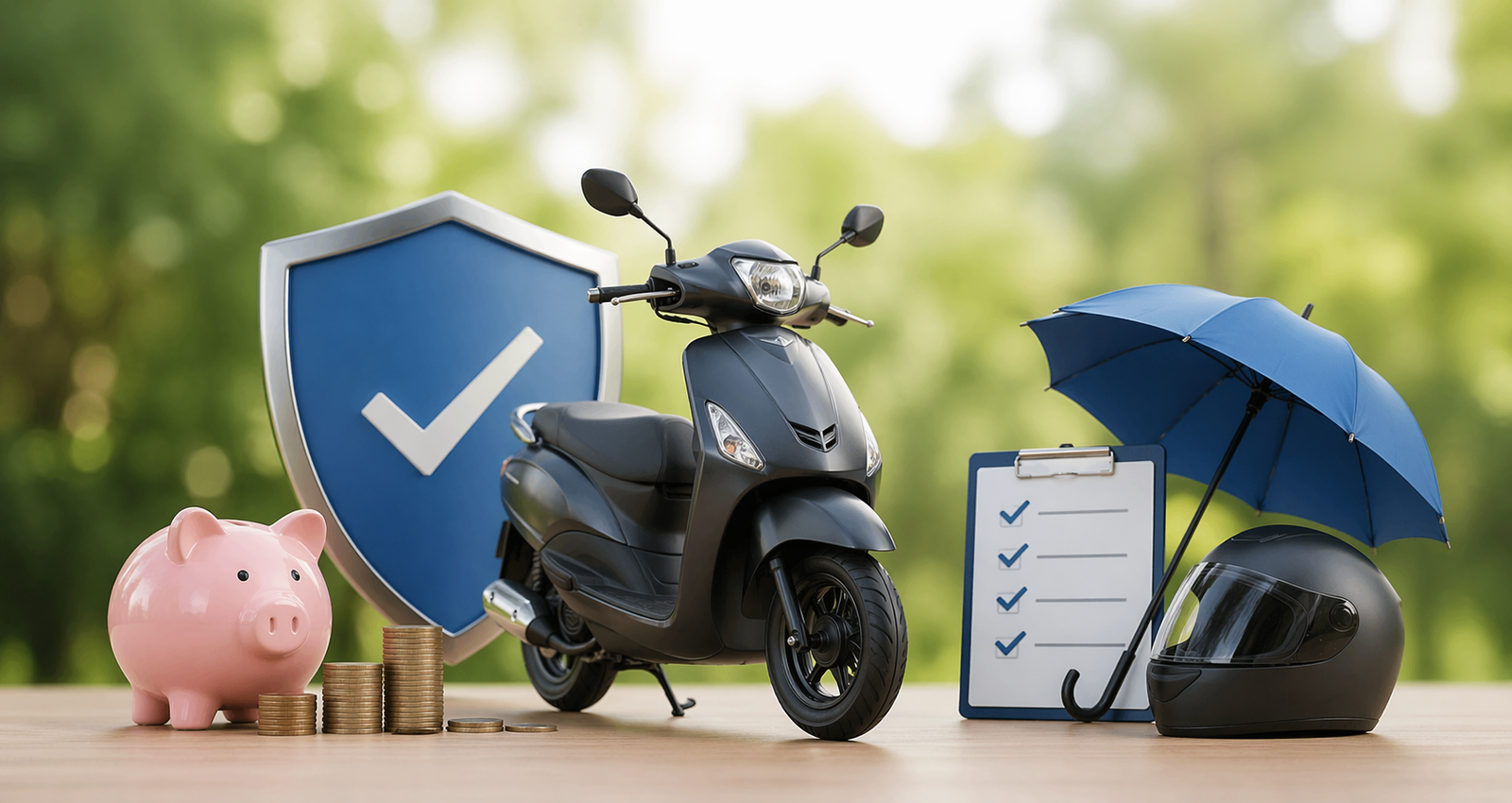
Most riders will have noticed that their bike insurance premiums change slightly every year. Sometimes it increases because of market value adjustments or policy changes. At other times, the cost depends on the choices made while purchasing or renewing the policy.
Two wheeler insurance plans help riders secure their accounts in case of damage, accidents, and liabilities during their journey. Some of these components, such as own damage insurance for bikes, help riders secure their machines against risks such as accidents, natural occurrences, and theft.
What usually affects bike insurance premiums
Before understanding how to reduce premiums, learn about the factors that are considered when calculating premiums.
| Factor | Why it matters |
| Engine capacity | Bikes with larger engines may lead to a higher risk and insurance cost |
| Age of the bike | The insured value changes as the vehicle ages |
| Location of registration | Urban regions may have different risk levels |
| Claim history | Frequent claims may affect benefits at renewal |
| Policy add-ons | Additional covers increase policy scope and premium |
Smart tips to lower your 2 wheeler insurance premium
Here are 7 simple tips that can lower your bike insurance premium:
1. Maintain a claim-free record
When no claims are made during the policy year, insurers offer a No Claim Bonus during renewal.
This benefit can increase over consecutive claim-free years and can reduce the payable premium. Riders who avoid small claims and only use insurance for major repairs often retain this benefit.
2. Review add-ons before renewal
Add-ons are optional covers designed to expand protection. However, every add-on increases the policy premium.
Before renewing 2 wheeler insurance, it helps to review whether all previously selected add-ons are still necessary.
3. Consider voluntary deductibles
A deductible is the portion of the repair cost that the policyholder agrees to pay during a claim. Policies also allow riders to choose voluntary deductibles.
Choosing a higher voluntary deductible may reduce the premium because the insurer’s share of claim expenses becomes lower.
4. Install recognised safety devices
Security features play a role in risk assessment. Bikes equipped with safety devices like approved anti-theft devices or immobilisers can be less vulnerable to theft.
Insurers may consider such devices when calculating premiums. These safety devices not only improve protection but also influence policy costs.
5. Choose the right insured declared value
The Insured Declared Value or IDV represents the estimated market value of the bike used for claim settlement.
A very high IDV increases the premium because the insurer’s claim payout rises. On the other hand, setting the IDV too low can affect compensation during claims.
It is best to select a balanced IDV to maintain a reasonable premium while ensuring appropriate protection.
6. Understand the role of own damage coverage
Along with mandatory third-party cover, riders often purchase own damage insurance for bike protection.
This part deals with damages due to accidents, fire, theft, or natural occurrences.
The premium for this type of 2 wheeler insurance depends on the bike’s age, location, and declared value.
7. Renew the policy without delays
Delays in policy renewal can cause the rider to lose the No Claim Bonus.
Renewing the policy without delays helps the rider maintain the continuity of the insurance policy and maintain the premium cost.
Make the Right Choice to Save 2 Wheeler Insurance Premiums
The premium amount for a 2 wheeler insurance policy depends on various small yet smart decisions. Riders who maintain a claim-free record or use add-ons also lower the premium amount.
Understanding how components like IDV and own damage insurance for bikes function also helps riders structure their policies more effectively. These steps do not reduce protection, but help decide insurance coverage according to usage and value of the bike.