
E-commerce founders evaluate a free zone differently than most other businesses, because almost nothing about their operation depends on a physical address. No retail footfall to consider, no walk-in customers, no reason to weigh one district's foot traffic against another's. What actually matters is whether the structure behind the business can keep up with how an online company actually operates: shipping fast, getting paid reliably, and not being tied to a single market the way a storefront would be.
That is part of why a growing number of e-commerce founders treat free zone choice as a logistics decision first, not a real estate one. A company selling internationally needs fulfilment and customs clearance to work smoothly regardless of where the warehouse physically sits, which makes proximity to air cargo infrastructure a far more relevant factor than proximity to a shopping district. For a business built around getting product to customers quickly, operating near major cargo capacity is closer to a core operational requirement than a secondary consideration.
There is also a banking and payments dimension that online sellers run into faster than most other business types. E-commerce companies typically need payment gateway integration, multi-currency handling, and the ability to operate accounts that are not tied to a single domestic market, since their customers rarely are either. A free zone structure that supports full foreign ownership and straightforward banking setup removes friction that would otherwise show up the moment a founder tries to start collecting payments from international customers.
The digital-first registration that defines free zones generally is an even better fit for e-commerce specifically, since the entire founding team may never need to be in the same room, let alone the same country, to get the company licensed and operating. A business built to run remotely benefits from being registered the same way.
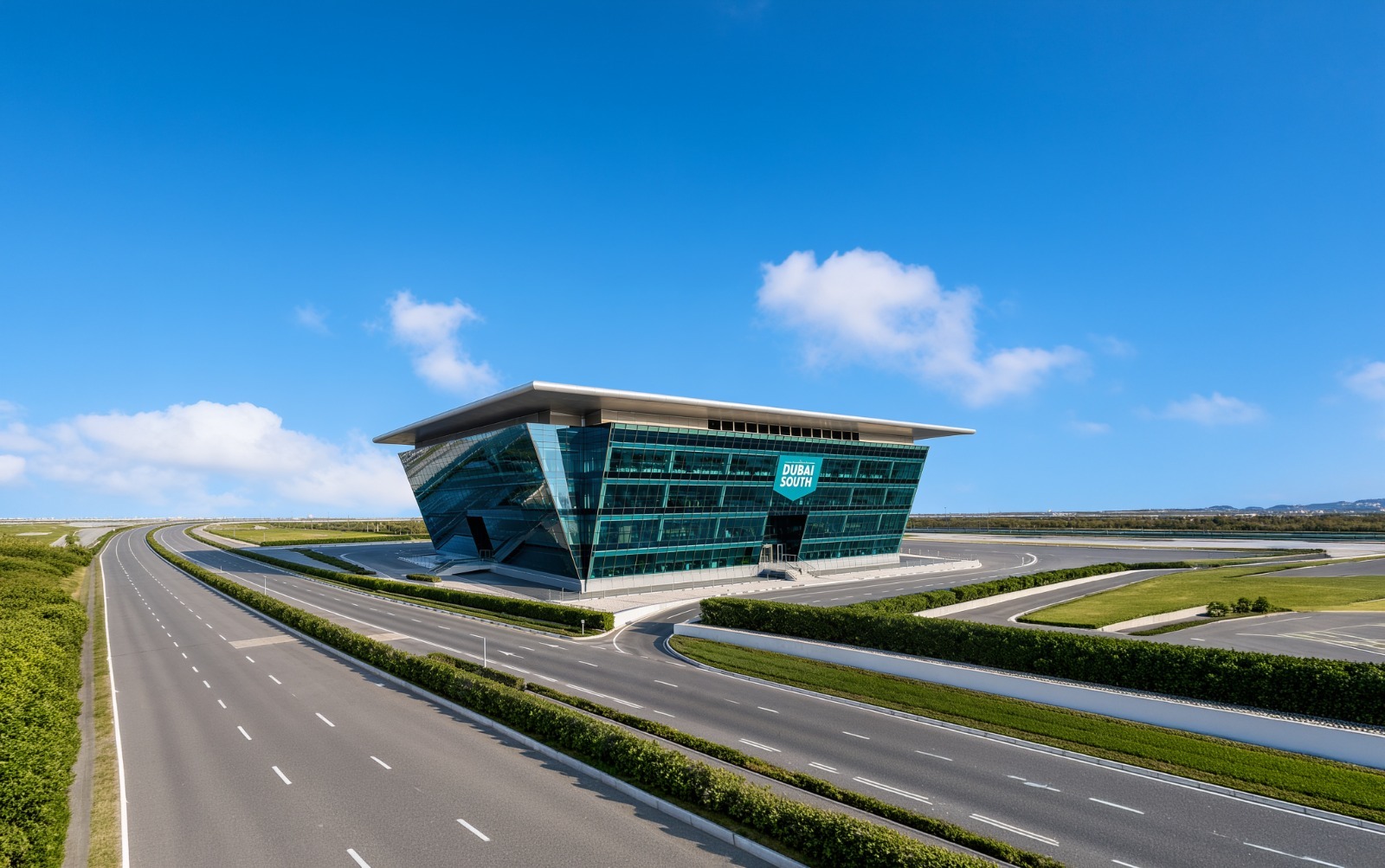
Dubai South Business Hub Free Zone sits adjacent to Al Maktoum International Airport, one of the region's primary air cargo gateways, and connects to Jebel Ali Port and Etihad Rail within the same logistics corridor. Combined with full foreign ownership, over 3,500 approved business activities, and a fully digital registration process, it is part of why e-commerce founders increasingly treat it as a logistics-first base rather than just another free zone option. For a business where shipping speed and international reach matter more than a physical office, that combination gives Dubai South Business Hub Free Zone a practical operational advantage.
The free zone decision for an online business was never really about the address. It was always about whether the infrastructure behind that address moves products and money the way the business actually needs them to.
About Dubai South Business Hub Free Zone
Dubai South Business Hub Free Zone is a fully digital free zone for company formation in Dubai, offering 100% foreign ownership and over 3,500 approved business activities with up to five included on a single license at no additional cost. Founders can complete registration, licensing, visa processing, banking support and ongoing compliance entirely online. Located in Dubai South, the free zone has direct access to Al Maktoum International Airport, Etihad Rail and Jebel Ali Port. For more information, visit dubaisouthbh.com, email setup@dubaisouthbh.com or call 800-DSHUB (37482).





Leave a Comment