
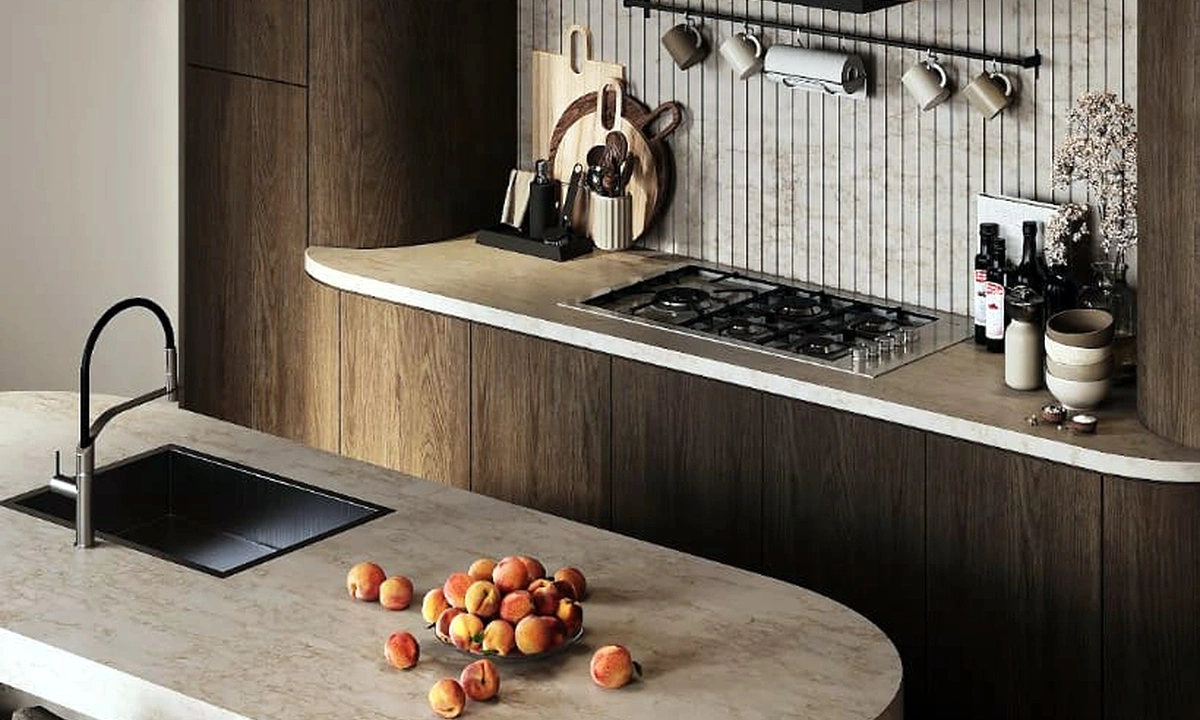
The kitchen is one of the most active spaces in an Indian home. It brings together heat, water, food, movement, and family routines, making its design particularly important from a Vastu perspective. While planning an entirely Vastu-compliant kitchen may not always be possible, especially in apartments or compact urban homes, small changes in placement, colour, lighting, and materials can help create a more balanced environment.
Start With the Right Direction
According to Vastu Shastra, the southeast is considered the ideal direction for a kitchen because it is associated with Agni, or the fire element. The northwest is generally considered the next suitable option. While homeowners may have limited control over the location of an existing kitchen, the positioning of individual elements can still be considered.
The cooking range is traditionally recommended in the southeast portion of the kitchen, with the person cooking ideally facing east. Water-related elements such as the sink are better suited to the north or northeast. Keeping the fire and water elements separated rather than directly opposite one another is also considered preferable.
For existing kitchens where these arrangements are not possible, Vastu need not become a source of anxiety. The focus can instead be on creating visual and functional balance through colour, organisation, lighting, and carefully considered placement.
Bring in Colours That Feel Balanced
Colour is one of the easiest ways to introduce a Vastu-inspired approach without undertaking structural changes. Traditional Vastu guidance generally favours warm and uplifting colours such as light yellow, orange, peach, pink, and earthy tones for kitchens, while excessively dark shades are often discouraged.
However, this doesn't mean that contemporary kitchens need to look brightly coloured. Soft versions of these shades can create a more modern interpretation. Pastel peach, muted yellow, sage green, warm beige, and powder blue can add character while keeping the space visually light.
Quartz surfaces can make this approach particularly versatile. Specta Quartz Surfaces offers a range of colours and designs that allow homeowners to introduce softer tones into countertops, islands, and backsplashes without compromising on everyday performance. The result is a kitchen where colour becomes part of the overall atmosphere rather than simply a decorative addition.
Keep Fire and Water Visually Balanced
The kitchen naturally brings together two contrasting elements: fire from the cooking area and water around the sink. From a Vastu perspective, maintaining separation between these elements is considered important.
Even when the existing layout cannot be changed, small visual adjustments can help create a sense of distinction. Different countertop zones, cabinetry finishes, or even subtle changes in colour can visually separate the cooking and washing areas.
This principle also aligns with practical kitchen design. Keeping the sink and cooking range sufficiently apart makes the workspace easier to navigate, reduces splashing near cooking surfaces, and creates a more organised workflow.
Make Natural Light and Ventilation a Priority
Vastu places considerable importance on light and air, and this is one area where traditional principles strongly overlap with contemporary interior design.
Whenever possible, kitchens should receive adequate natural light and ventilation. Windows, exhaust systems, openable shutters, and well-positioned lighting can prevent the space from feeling stuffy or enclosed. A brighter kitchen can also feel more spacious and inviting, particularly in smaller urban homes.
For kitchens with limited daylight, a combination of ambient, task, and under-cabinet lighting can help compensate. Warm or neutral white lighting can create a comfortable atmosphere while focused illumination over countertops improves visibility during food preparation.
Choose Surfaces That Support Hygiene
A Vastu-friendly kitchen should also be a practical kitchen. Since countertops are in constant contact with food, ingredients, water, and cleaning products, their hygiene and maintenance requirements deserve careful consideration.
Non-porous surfaces can be particularly useful because they are less likely to absorb spills and are easier to clean. Materials that can withstand everyday use also reduce the need for frequent replacement, supporting a more durable approach to kitchen design.
Specta Quartz Surfaces combine a broad design vocabulary with performance-oriented qualities, making quartz suitable for contemporary Indian kitchens where cooking can involve everything from turmeric and oils to tea and coffee spills. Choosing surfaces that are easy to maintain can contribute to a kitchen that feels cleaner, more organised, and more comfortable to use.
Introduce Natural Elements Thoughtfully
Vastu-inspired kitchens don't have to rely exclusively on traditional décor. Natural elements such as wood, plants, stone-inspired textures, and earthy colours can introduce warmth while creating a more grounded atmosphere.
Brands such as Asian Paints offer extensive colour palettes that can help homeowners experiment with warm, earthy or pastel tones, while Jaipur Rugs demonstrates how natural textures can add depth and warmth to adjoining dining or living areas. For kitchens, brands such as Häfele India also offer practical hardware and storage solutions that can help keep countertops organised and movement through the space more seamless.
The idea is not to fill the kitchen with decorative elements, but to use materials and details that create a sense of visual harmony.
Don't Overlook Organisation
One of the simplest Vastu-inspired changes is also one of the most practical: reduce clutter. An overcrowded countertop can make even a large kitchen feel cramped, while a well-organised space creates a greater sense of openness.
Keep frequently used appliances accessible, store rarely used items away, and maintain clear working zones for preparation, cooking, and cleaning. Good storage also makes it easier to keep food preparation surfaces hygienic.
Ultimately, kitchen Vastu doesn't have to mean redesigning your entire home around a rigid set of rules. It can be approached as a thoughtful design framework—one that encourages balance between fire and water, light and shade, movement and stillness. When these principles are combined with practical considerations such as ventilation, hygiene, ergonomics, and organisation, even small changes can make the kitchen feel more harmonious and enjoyable for everyday living.



Leave a Comment