
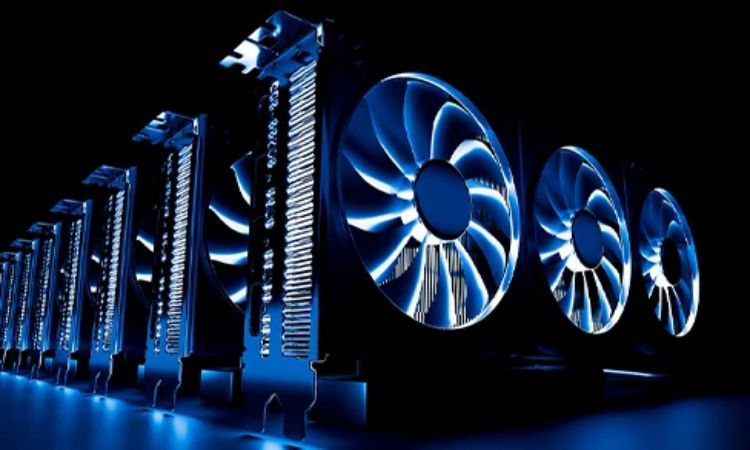
It is a tension playing out in boardrooms everywhere: corporate timelines demanding rapid innovation versus the grueling, multi-month realities of physical supply chains and data center build-outs. For a long time, the default strategy for heavy compute was simple—you bought the hardware, bolted it into a rack, and controlled your own destiny. But as models balloon in size, the math behind the total cost of ownership (TCO) for data processing infrastructure has shifted dramatically.
The Visible Iceberg: On-Premise Reality
When teams calculate the cost of building their own high-performance compute environment, they usually start with the sticker price of the silicons themselves. Let’s be honest, though: that is just the tip of a very deep, very expensive iceberg.
To understand this, we have to look at what happens the moment those units land on your loading dock:
● The Cooling Tax: You aren't just paying for processors; you are paying for specialized direct liquid cooling systems to keep them from melting.
● The Real Estate & Grid Burden: High-density hardware demands enterprise-grade real estate and specialized power grid access.
● The Talent Premium: You need a team of rare, highly paid network engineers who know how to configure high-speed InfiniBand architectures without causing massive data throughput bottlenecks.
Then there is the friction of time. In the tech space, a three-month delay in procuring and configuring hardware can mean missing an entire market window. By the time an on-premise cluster is fully operational, the specific model architecture it was optimized to train might already be legacy tech.
The Hidden Multipliers of Maintenance
Of course, it isn’t always that simple. Proponents of ownership point out that once you pay off the capital expenditure, the ongoing utilization looks "free" on paper. But the thing is, high-compute hardware depreciates at a dizzying pace. The shelf-life of a cutting-edge processor in the machine learning ecosystem is currently hovering around two to three years before it is eclipsed by architecture that is multiple times faster and more energy-efficient.
Frankly, managing physical infrastructure introduces an operational tax that eats away at engineering focus. When an on-premise node goes down at 2:00 AM during a critical training run, it is your internal team that loses sleep, and your timeline that takes the hit.
Shifting the Paradigm to On-Demand Agility
This is where things get complicated for businesses trying to scale. Do you lock yourself into a rigid, long-term capital commitment, or do you seek a model that mirrors the fluid, unpredictable nature of modern business?
Choosing to source your infrastructure via AI cloud service providers completely rewrites the financial equation. Instead of treating compute power as a static, depreciating asset on a balance sheet, it becomes an elastic operational expense.
When you need to train a massive multi-modal model, you spin up an array of high-end processors. When the training finishes and you move to a less intensive inference phase, you dial the capacity right back down. You only pay for the exact compute cycles you consume.
The Hidden Cloud Catch: True TCO reduction isn't just about avoiding a heavy upfront check; it's about eliminating the friction of data movement. A major hidden cost of cloud environments has traditionally been data egress fees, the financial penalty businesses pay just to move their own data between different platforms and storage blocks.
A Systemic Approach to Innovation
This is why looking at hardware in a vacuum misses the point. At Tata Communications, the thinking behind the Vayu AI Cloud isn’t about just renting out isolated slices of silicon and wishing you luck. It’s about building a whole ecosystem that actually plays nice together, coupling raw, bare-metal performance with intelligent workload balancing, tight security, and high-speed file systems that don't keep your data waiting.
The reality of cloud migrations is that networking and storage bottlenecks are usually what end up blowing past your budget. By tackling those headaches right out of the gate, this unified system protects your bottom line. Take data egress charges, for example; having integrated multi-cloud connectivity baked right into the platform can actually trim those fees by up to 40%. It changes the whole conversation. Suddenly, you aren't constantly compromising between raw performance and a massive bill; you're just focused on getting your tech out the door.
Ultimately, the choice between on-premise setups and cloud-delivered GPU solutions comes down to how your business defines value. If your organization enjoys unlimited capital, has specialized facilities ready to go, and possesses an underutilized team of niche data center engineers, ownership might make a sliver of sense. But for enterprises that prioritize speed to market, predictable operational budgets, and the agility to instantly pivot to next-generation architectures, the cloud-delivered model doesn't just save money, it removes the operational noise, allowing your builders to actually build.



Leave a Comment