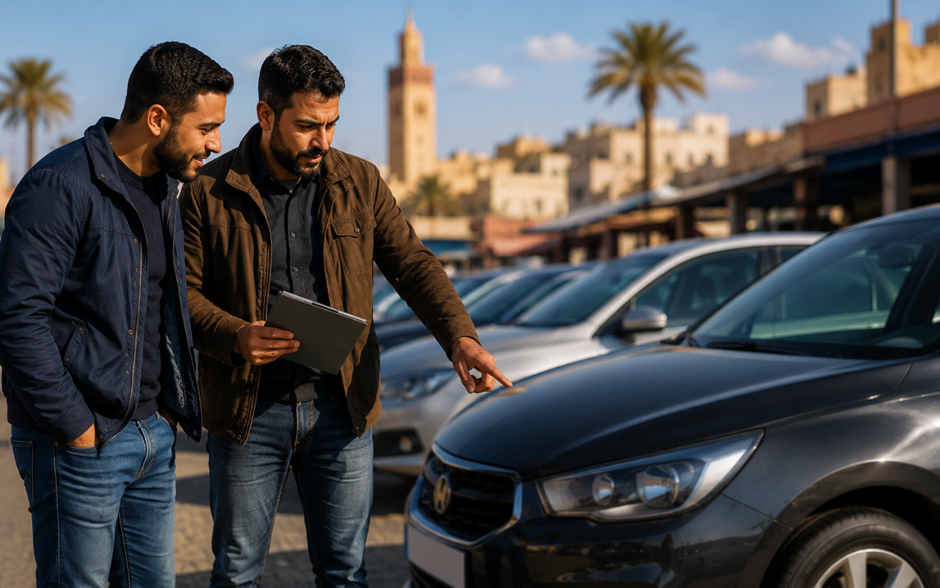
Something shifted in Morocco’s car market around 2025 and it has not shifted back. More people are buying pre-owned vehicles, not as a compromise, but as a deliberate choice. Rising new car prices pushed a lot of buyers in this direction initially. What has kept them here is that the experience has been better than expected.
The market for used cars in Morocco in 2026 is genuinely more navigable than it was three or four years ago. Vehicle history access has improved. Independent inspection services are more widely used. Online comparison tools mean a buyer in Fez can spend two hours evaluating five cars in Casablanca before booking a train. That kind of access changes the power dynamic between buyers and sellers in ways that are not subtle.
Why the Sector Keeps Growing
New vehicle prices are the obvious driver. Manufacturing costs, import duties, and sustained inflation have pushed showroom prices higher than many buyers are willing to go. Used vehicles fill the gap. But there is more to it than that.
The inventory available today is far broader than it used to be. Compact city cars, family sedans with documented histories, mid-range SUVs, commercial vans for small businesses, and the occasional premium model that has been maintained properly. The range now covers enough ground that most buyers can find something that actually fits rather than something that roughly works.
Digital access helped too. Filtering by mileage, fuel type, ownership history, and price from a phone removed the friction that used to push people toward their nearest dealership whether they liked what was on the lot or not. More access pulled more buyers in. More buyers attracted more sellers. It compounded.
How Buyers Actually Approach this Now
Most people start researching before they have any serious intention to buy. That is just how it works now. They have a rough sense of what they need, they start browsing, and the research sharpens the requirements.
What does the vehicle need to do, specifically? Daily commuting through city traffic points toward a compact that does not drink fuel. Regular travel between cities points toward something more comfortable and efficient at speed. A family of five with a dog and weekend plans points toward an SUV with a service history that is not three lines long.
Getting that clarity early matters because it stops buyers from purchasing something they will resent six months later. The wrong car at a decent price is still the wrong car.
Ownership reviews, maintenance records, resale comparisons, and insurance cost estimates have all become standard parts of the research process. Vehicle history reports have grown in practical importance. Knowing that a car has not been in a serious accident, has not had three owners in eighteen months, and has had its scheduled maintenance done removes most of the anxiety that used to make pre-owned buying feel like a gamble.
Financing Has Changed
Not long ago, financing a used vehicle in Morocco was complicated enough that many buyers avoided it altogether. That has changed. Banks and lenders now offer packages built specifically for pre-owned buyers, with repayment terms that spread costs across manageable periods.
The monthly payment is still only part of the picture, though. Fuel costs, insurance, regular maintenance, and registration all add up across twelve months. Buyers who add those numbers together before committing are the ones who end up unsurprised at month ten. The ones who do not have the monthly payment memorised but not much else are the ones who feel stretched.
A realistic budget built around total ownership cost tends to produce a better purchase than a budget built around the sticker price.
What People are Actually Buying
Compact hatchbacks are still the sensible choice for city residents and probably always will be. Easy to park, cheap to fuel, not expensive when something goes wrong. For anyone whose driving is mostly urban, nothing has really displaced them.
SUVs have been the story of the last few years. Families want the space. People who drive outside city limits appreciate the clearance. The used SUV market has expanded to the point where a buyer with a mid-range budget now has real options rather than one or two acceptable choices. That has accelerated demand considerably.
Sedans remain the practical choice for professionals who cover real distances and want to arrive in reasonable comfort. Commercial vehicles are moving faster as small businesses grow their operations. And fuel-efficient models, including hybrids, have attracted a specific category of buyer who has started paying attention to running costs in a way they simply were not three years ago.
Importance of Inspections
A car can look clean, start without complaint, and behave fine on a ten-minute drive around the block. None of that tells you what the engine internals look like or whether the transmission has been overworked.
Mechanical inspection by someone who does not have a financial interest in the sale is not optional. Engine performance, gearbox condition, brakes, suspension, structural integrity. A good evaluation also tells you what maintenance is coming up, which gives you something specific to negotiate on.
The test drive reveals things the inspection does not. How the car handles at speed, whether the brakes require more pressure than they should, how much road noise comes through, how the seats actually feel after thirty minutes rather than five. These are not minor considerations.
Documentation should be verified, not just glanced at. Registration papers, service history, and ownership records either match what you were told or they raise questions. If they raise questions, get answers before the money moves.
Regional Patterns
Vehicle demand in Morocco is not uniform across the country and pretending otherwise misses something real.
Urban buyers lean toward compact, maneuverable vehicles that fit the daily realities of city driving. Buyers in suburban and rural areas lean toward SUVs and utility vehicles that can handle longer distances and less predictable roads. These are not interchangeable preferences.
Some regions have been additionally shaped by tourism. Areas with consistent visitor traffic see stronger demand for reliable transport tied to hospitality and service businesses. The same model can carry different market dynamics depending entirely on geography.
How Technology has Changed the Search
Search filters are genuinely useful now. Setting brand, model, mileage ceiling, fuel type, and budget before opening a single listing was not practical at scale a few years ago. High-resolution images and video walkthroughs give buyers a realistic sense of condition before any physical visit is arranged.
Valuation tools have addressed one of the oldest problems in used car buying: not knowing whether an asking price is honest or optimistic. When a buyer can check market pricing data in real time before arriving at a viewing, the conversation goes differently.
The inspection and test drive are still irreplaceable. But the research phase takes significantly less time than it used to, and buyers arrive better prepared.
Long-term Value, Not Just Purchase Price
The cheapest purchase is rarely the best one over a four-year window. Buyers who know this tend to make different decisions at the point of sale.
Reliability is the foundation. Vehicles with maintained service histories and a known track record generate fewer expensive surprises. Parts availability matters too, especially for models where sourcing components is not straightforward locally.
Resale value deserves more weight than most buyers give it. Some brands hold their market demand well and can be resold without taking a significant loss. Buying one of them means the cost of ownership across the full period is lower than it appears at the point of purchase. Buying something that has depreciated steeply just to save upfront is often a false economy.
Buying in Major Cities
Large urban markets offer the most inventory and the most negotiating room. Those two things are connected.
Buyers exploring cars for sale in Casablanca encounter one of the widest selections in the country. The volume of listings creates real competition among sellers and keeps pricing honest in a way that smaller markets cannot always match. A buyer who has done their research and looked at several options has genuine leverage before any price conversation starts.
The practical argument for shopping in a major urban centre is simple. More options mean more comparisons. More comparisons produce better decisions. Buyers who commit to the first thing that seems acceptable almost always leave something on the table.
Where the Market is Going
Digital tools are improving. Financing options are expanding. The buyer base is arriving with better preparation than it had a few years ago.
Sellers who provide honest records and realistic pricing attract serious buyers. Sellers who do not are finding that harder to get away with than it used to be. The market is not perfectly efficient, but it is more efficient than it was, and that gap will narrow further.
For buyers willing to put in reasonable preparation, Morocco’s used car market in 2026 offers a wider range of choices, more reliable information, and a more navigable process than at any previous point.