
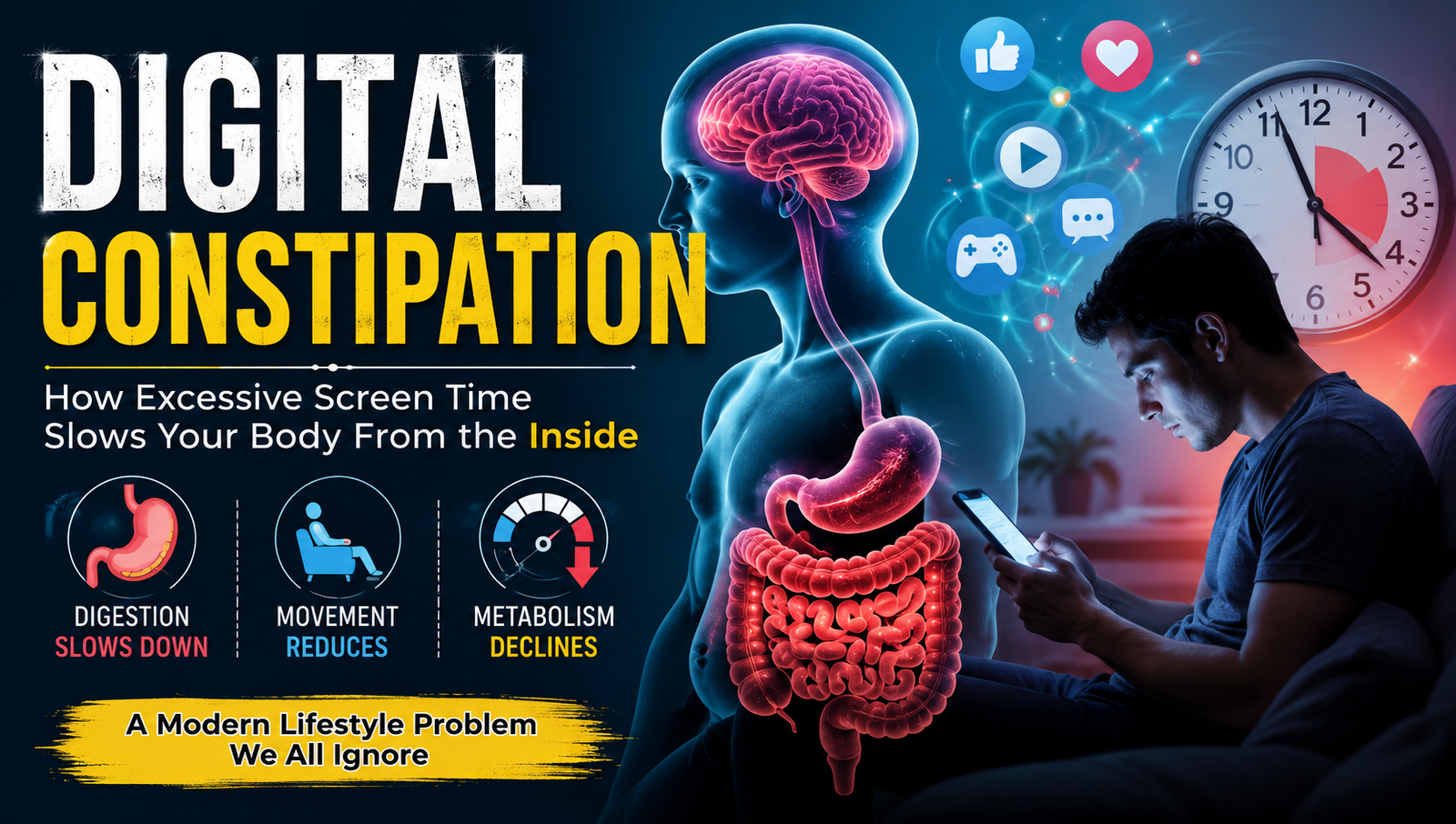
What Is Digital Constipation?
Digital Constipation is a modern lifestyle condition where excessive screen time and prolonged sitting begin affecting the body’s natural movement systems.
It can influence:
- digestion
- metabolism
- posture
- circulation
- mental energy
- physical activity
- sleep quality
The body gradually becomes less active internally and externally.
Just as physical constipation slows waste movement in the body, excessive digital habits can slow the body’s natural rhythm as a whole.
How Screens Affect Digestion
The Body Was Never Designed to Sit for Endless Hours
Human digestion works best when the body remains physically active.
Movement helps:
- stimulate the intestines
- improve blood circulation
- support metabolism
- regulate appetite
But excessive screen time usually means prolonged sitting.
When people remain seated for many hours:
- digestion slows
- bloating increases
- stomach heaviness develops
- bowel movement may become irregular
This is especially common among:
- office workers
- gamers
- students
- remote workers
- content creators
The digestive system becomes less efficient because the body itself becomes less active.
One of the Biggest Modern Health Habits
Many people now eat while:
- watching videos
- scrolling social media
- gaming
- working on screens
This disconnects the brain from the eating process.
As a result:
- overeating becomes common
- chewing decreases
- digestion weakens
- satiety signals become delayed
The body struggles to process food properly because attention remains trapped inside digital stimulation instead of physical awareness.
This habit silently contributes to:
- acidity
- indigestion
- bloating
- weight gain
- fatigue after meals
How Screen Addiction Reduces Physical Movement
Earlier generations naturally moved more throughout the day. Modern digital life has replaced movement with sitting.
Today, many people spend:
- 8–12 hours sitting
- minimal time walking
- little sunlight exposure
- very low physical activity
The body begins adapting to inactivity.
Over time, this may cause:
- muscle stiffness
- poor posture
- weak circulation
- lower stamina
- body pain
- low energy levels
The less the body moves, the more sluggish it becomes.
Why the Body Starts Burning Energy More Slowly
Metabolism is the process through which the body converts food into energy.
Physical movement naturally supports healthy metabolism. But excessive screen exposure often creates:
- inactivity
- irregular eating patterns
- poor sleep
- stress overload
All these factors may slow metabolic efficiency.
A slower metabolism can contribute to:
- constant tiredness
- weight gain
- low motivation
- sugar cravings
- reduced energy
- brain fog
Many people believe aging alone causes these problems, while digital lifestyle habits may also be playing a major role.
How Screens Affect the Body Even at Night
Mobile phones, televisions, and laptops emit blue light that interferes with melatonin — the hormone responsible for healthy sleep.
Late-night scrolling keeps the brain artificially alert.
Poor sleep affects:
- digestion
- stress hormones
- metabolism
- hunger regulation
- body recovery
This creates a cycle where:
- screen use disturbs sleep
- poor sleep affects metabolism
- low energy reduces movement
- inactivity worsens digestion
The body slowly enters a state of constant sluggishness.
When the Brain Becomes Constantly Overstimulated
Excessive screen exposure does not only affect the body physically. It also overwhelms the mind.
Continuous scrolling floods the brain with:
- information
- emotions
- comparison
- noise
- notifications
This mental overload can increase:
- stress
- anxiety
- emotional fatigue
- concentration problems
Many people feel exhausted despite doing little physical work because their brain remains overstimulated throughout the day.
Mental exhaustion often reduces motivation for physical activity, creating another unhealthy cycle.
Signs You May Be Experiencing “Digital Constipation”
Some common warning signs include:
- feeling bloated regularly
- sitting for long hours without movement
- low daily energy
- sluggish digestion
- poor posture
- constant scrolling habits
- physical inactivity
- mental fog
- poor sleep quality
- tiredness without heavy work
These symptoms are becoming increasingly common in modern urban lifestyles.
Simple Ways to Reverse Digital Constipation
Small lifestyle changes can help restore the body’s natural rhythm.
Helpful habits include:
- standing up every 30–45 minutes
- walking after meals
- reducing unnecessary screen time
- avoiding phones during eating
- getting sunlight exposure daily
- improving sleep schedules
- stretching regularly
- practicing mindful eating
- increasing physical activity gradually
The body heals best when movement returns naturally to daily life.
Why This Topic Matters Today
Technology itself is not the enemy. The real problem is imbalance.
Human biology evolved for movement, nature, social interaction, and physical activity. Modern digital lifestyles have reduced all four dramatically.
As screen dependence grows globally, conditions related to inactivity, poor digestion, mental fatigue, and metabolic imbalance are becoming more common — even among young people.





Leave a Comment