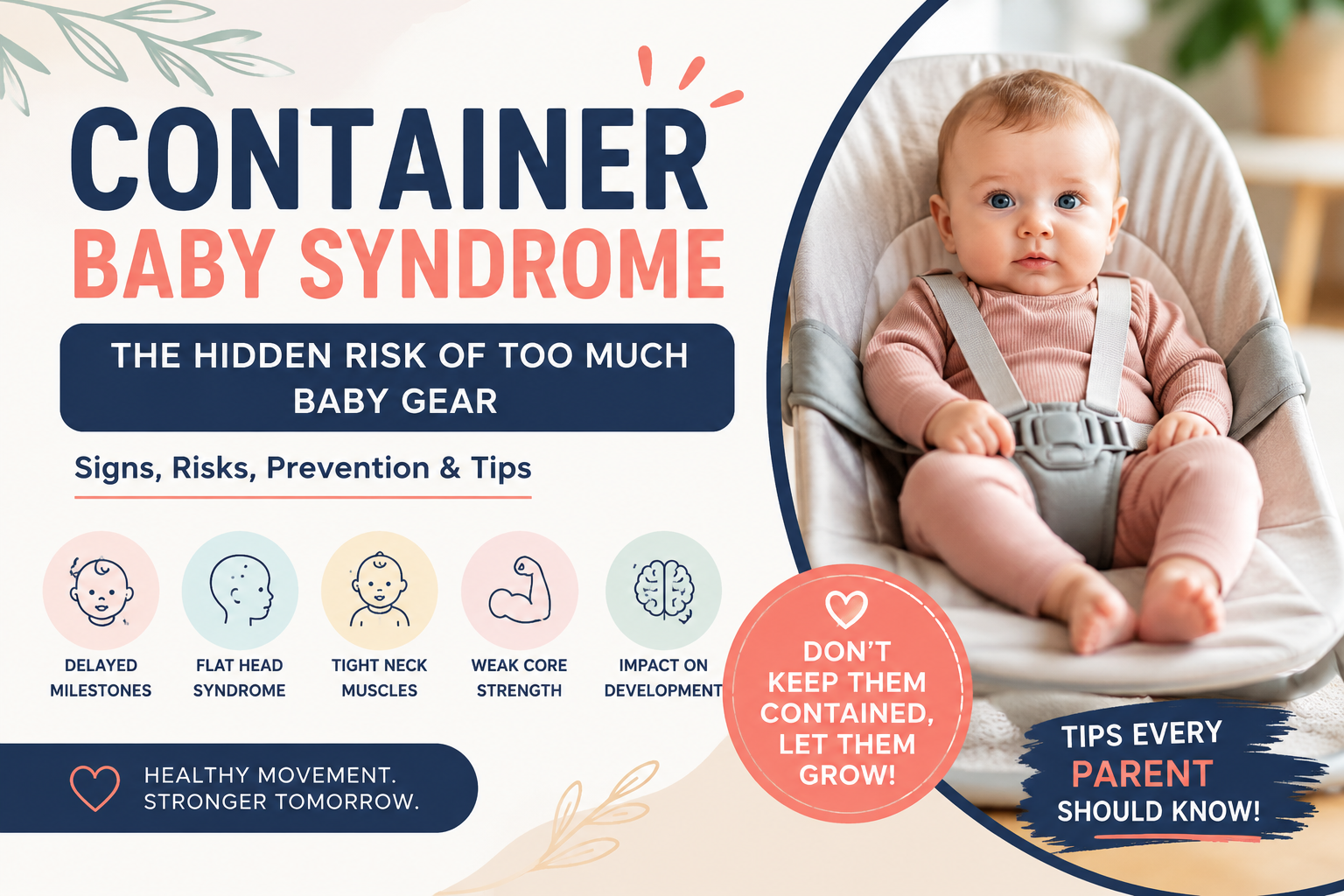
Container Baby Syndrome (CBS) is a group of developmental and physical problems that can occur when a baby spends too much time in devices that restrict movement, such as car seats, strollers, swings, bouncers, and baby walkers.
While these products are useful and safe when used properly, overuse can limit a baby’s natural movement and affect healthy development.
Common Baby Containers
The following products may contribute to CBS if used for long periods:
- Car seats (outside travel)
- Strollers
- Baby swings
- Bouncers and rockers
- Floor seats
- Baby walkers
- Jumpers and activity centers
Signs and Symptoms
1. Flat Head Syndrome
A flattened area on the back or side of the baby’s head caused by prolonged pressure.
2. Tight Neck Muscles
The baby may prefer looking in only one direction due to neck stiffness.
3. Delayed Milestones
Difficulty or delays in:
- Rolling over
- Sitting up
- Crawling
- Standing
4. Weak Core Muscles
Reduced strength in the neck, back, and trunk muscles.
5. Limited Exploration
Less movement can reduce opportunities for sensory learning and environmental interaction.
Why Is It a Concern?
A baby’s first year is crucial for brain and body development. Free movement helps babies:
- Build muscle strength
- Develop balance and coordination
- Explore their surroundings
- Reach developmental milestones on time
When movement is restricted for long periods, development may slow down.
How to Prevent Container Baby Syndrome
Limit Container Time
Avoid keeping your baby in swings, bouncers, or seats for extended periods.
Encourage Tummy Time
Supervised tummy time strengthens the neck, shoulders, and back.
Create a Safe Play Area
Allow your baby to move freely on a soft mat or blanket.
Try Baby-Wearing
Using a baby carrier can provide comfort while supporting natural movement.
Watch for Early Warning Signs
If you notice head flattening, neck stiffness, or developmental delays, consult your pediatrician.
When Should Parents Seek Medical Advice?
Contact a healthcare professional if:
- Your baby’s head appears unusually flat.
- The baby always looks to one side.
- Milestones are significantly delayed.
- Neck movement seems restricted.
Early intervention can often correct these issues successfully.
Container Baby Syndrome is not caused by using baby equipment—it is caused by overusing it. Babies need time to move, stretch, roll, and explore freely. A healthy balance between safety and movement is the best way to support your child’s physical and developmental growth.
Quick Parent Checklist
✅ Daily tummy time
✅ Plenty of floor play
✅ Limited use of swings and bouncers
✅ Regular movement and interaction
✅ Monitor developmental milestones
✅ Consult a pediatrician if concerned