
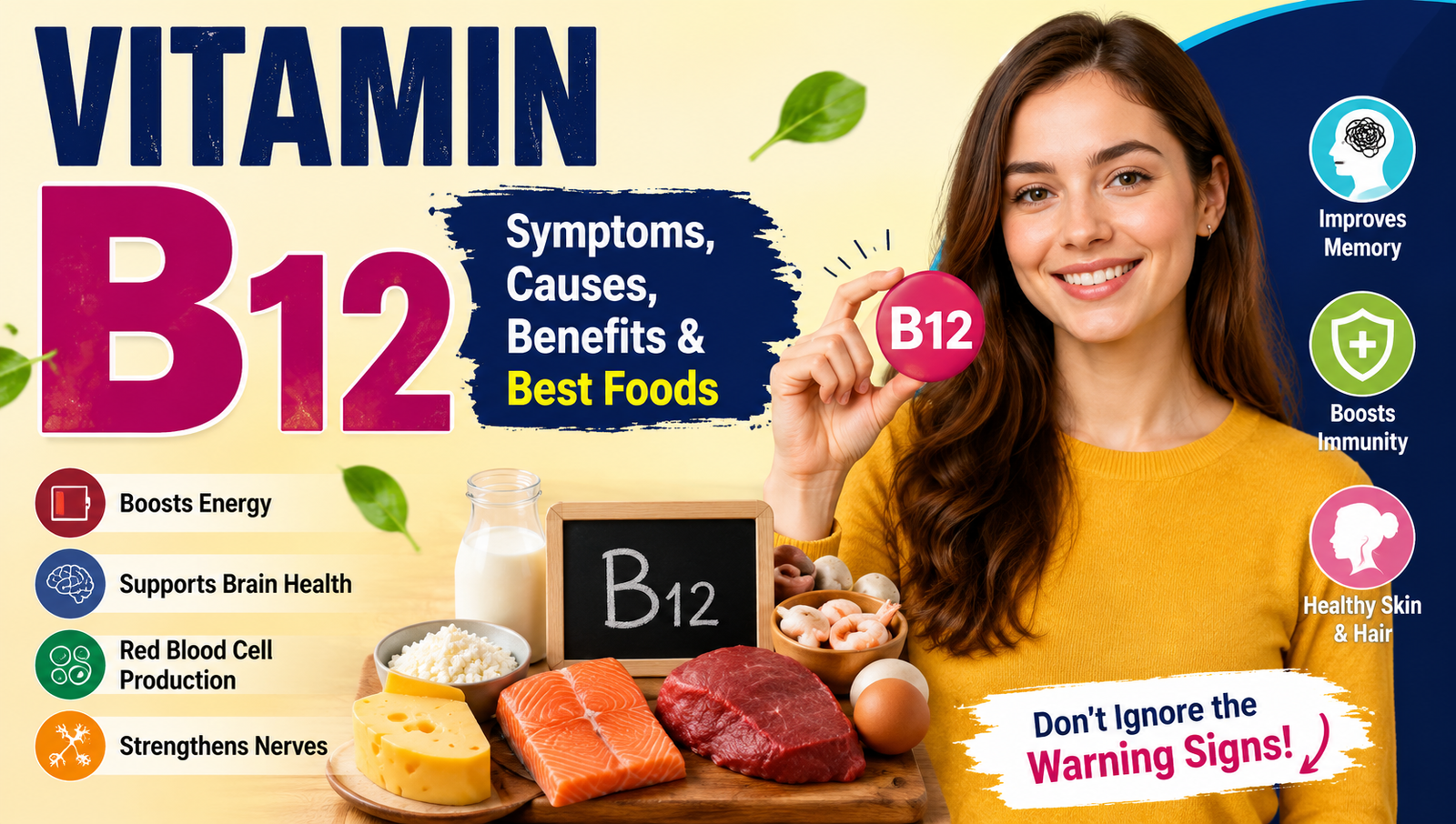
Vitamin B12 is one of the most important nutrients required for maintaining overall health and energy. Despite its importance, many people are unaware of how crucial this vitamin is for the brain, nerves, blood cells, and metabolism. A deficiency of Vitamin B12 can silently affect the body and lead to serious health complications if ignored for a long time.
In today’s busy lifestyle, irregular eating habits, poor nutrition, and digestive disorders have increased the number of people suffering from Vitamin B12 deficiency. Understanding this nutrient can help people maintain better health and prevent long-term problems.
What Is Vitamin B12?
Vitamin B12, also known as cobalamin, is a water-soluble vitamin that helps the body perform several important functions. Unlike some vitamins that the body can produce naturally, Vitamin B12 must be obtained through food or supplements.
This vitamin plays a key role in:
- Red blood cell formation
- DNA production
- Brain function
- Nervous system health
- Energy production
Without enough Vitamin B12, the body cannot function efficiently.
Why Vitamin B12 Is Important
Vitamin B12 supports many vital systems inside the body. It helps produce healthy red blood cells that carry oxygen throughout the body. It also protects nerve cells and supports proper brain function.
A healthy level of Vitamin B12 can help improve:
- Energy levels
- Memory and concentration
- Mood balance
- Heart health
- Metabolism
- Muscle strength
Because the vitamin affects both physical and mental health, maintaining adequate levels is extremely important.
Signs and Symptoms of Vitamin B12 Deficiency
Vitamin B12 deficiency can develop slowly, making it difficult to recognize early. Many people ignore the warning signs until the condition becomes severe.
Common Symptoms Include:
Constant Fatigue
Low Vitamin B12 levels reduce red blood cell production, which decreases oxygen supply in the body and causes weakness and tiredness.
Tingling or Numbness
Nerve damage caused by deficiency may lead to tingling sensations in the hands and feet.
Memory Problems
Vitamin B12 deficiency can affect concentration, memory, and mental clarity.
Pale or Yellowish Skin
Anemia caused by low B12 may change skin color and reduce natural glow.
Mood Changes
Some people experience depression, anxiety, or irritability due to poor nerve health.
Shortness of Breath
Low oxygen circulation may cause breathing difficulties during physical activity.
Frequent Dizziness
Reduced blood flow and anemia can trigger dizziness and headaches.
If these symptoms continue for a long time, medical testing becomes important.
Causes of Vitamin B12 Deficiency
Several factors can reduce Vitamin B12 levels in the body.
Poor Diet
People who consume very few animal-based foods may not get enough B12 naturally.
Vegetarian and Vegan Diets
Vitamin B12 is mainly found in animal products, so strict vegetarians and vegans may face deficiency risks.
Digestive Disorders
Conditions such as gastritis, Crohn’s disease, or intestinal problems can reduce nutrient absorption.
Aging
Older adults may absorb Vitamin B12 less efficiently due to reduced stomach acid production.
Certain Medications
Some medicines used for diabetes or acidity can interfere with Vitamin B12 absorption.
Best Food Sources of Vitamin B12
Including Vitamin B12-rich foods in the diet is the most natural way to maintain healthy levels.
Animal-Based Sources
- Eggs
- Fish
- Chicken
- Meat
- Milk
- Cheese
- Yogurt
Fortified Foods
For vegetarians and vegans, fortified foods can help provide B12.
Examples include:
- Fortified cereals
- Plant-based milk
- Nutritional yeast
A balanced diet is essential for preventing deficiency.
Vitamin B12 and Energy Levels
Many people associate Vitamin B12 with energy because it helps convert food into usable energy. While it is not a stimulant, proper B12 levels allow the body to function efficiently and reduce feelings of exhaustion.
People with deficiency often notice improved energy after treatment and dietary correction.
Who Is Most at Risk?
Certain groups are more likely to develop Vitamin B12 deficiency.
High-Risk Groups Include:
- Vegetarians and vegans
- Older adults
- Pregnant women
- People with digestive disorders
- Individuals taking long-term acidity medicines
- People with poor eating habits
Regular health checkups can help these groups monitor their vitamin levels.
How Vitamin B12 Deficiency Is Diagnosed
Doctors usually diagnose deficiency through blood tests. In some cases, additional tests may be needed to identify the underlying cause.
Early diagnosis is important because untreated deficiency can eventually cause permanent nerve damage.
Treatment and Prevention
Vitamin B12 deficiency is treatable in most cases.
Common Treatment Methods
Dietary Improvements
Adding B12-rich foods to daily meals can help restore healthy levels.
Supplements
Doctors may recommend Vitamin B12 tablets or capsules.
Injections
Severe deficiency may require Vitamin B12 injections for faster recovery.
Prevention Tips
- Eat a balanced diet
- Include fortified foods if vegetarian
- Get regular health checkups
- Avoid unnecessary crash diets
- Follow medical advice if symptoms appear
Consistency is important for maintaining healthy vitamin levels.
Can Too Much Vitamin B12 Be Harmful?
Vitamin B12 is generally considered safe because excess amounts are usually removed through urine. However, unnecessary supplementation without medical advice should still be avoided.
It is always better to maintain balance rather than relying on excessive supplements.