New Delhi [India], March 24: In contemporary homes, bathrooms are no longer treated as purely utilitarian spaces—they are evolving into zones of comfort, relaxation, and personal well-being. As this shift takes place, many homeowners are revisiting the principles of Vastu Shastra to ensure that even these functional spaces align with a sense of balance and positive energy. A Vastu-compliant bathroom is designed with the right placement, colours, materials, and layout choices that contribute to a harmonious environment.
Positioning: Getting the Direction Right
According to Vastu principles, the ideal placement for bathrooms is in the northwest or southeast zones of a home. These directions help maintain a natural flow of energy while minimising negative impact on other living spaces. Bathrooms should ideally not be located in the northeast, which is considered a sacred zone associated with clarity and spirituality. Within the bathroom, the positioning of fixtures also plays a role. The toilet seat should be aligned along the north-south axis, allowing the user to face either north or south. Showers and water outlets are best placed in the east, north, or northeast directions, ensuring that the water element is balanced and does not disrupt the overall energy flow.
Ventilation is another critical factor. Windows or exhaust systems placed in the east or north help remove moisture and allow natural light to enter, preventing stagnation—both physically and energetically.
Colour Palette: Creating a Sense of Calm
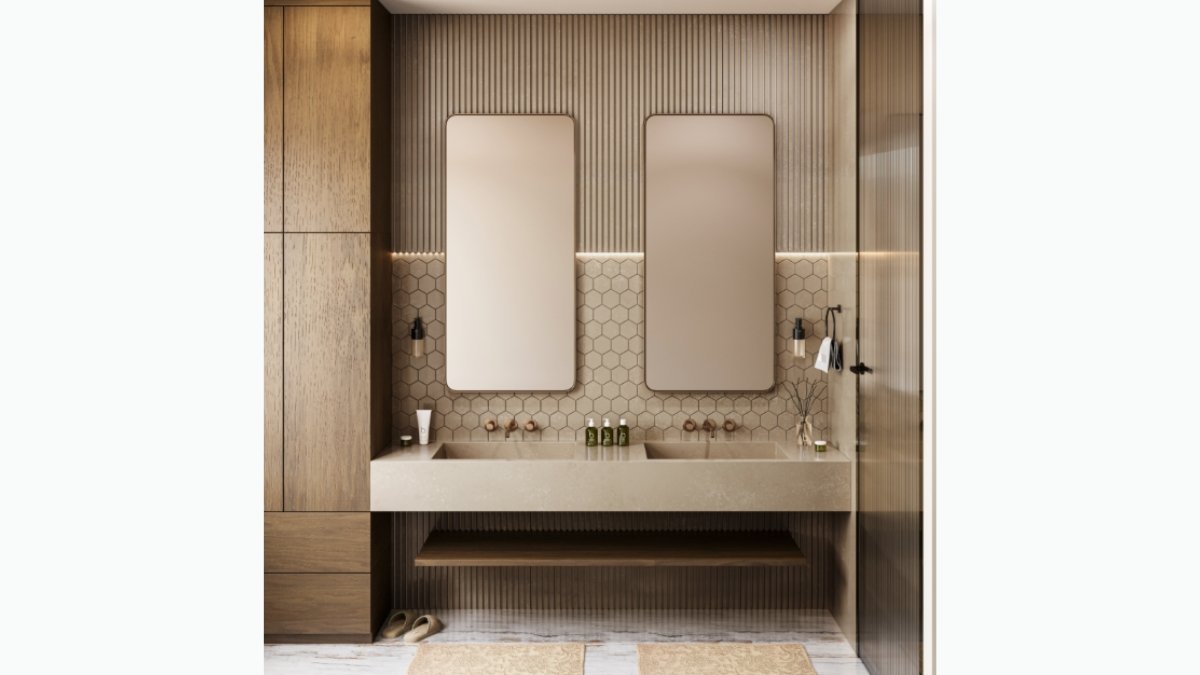
Colours have a direct impact on how a space feels, and in Vastu, they are closely tied to the elements. Bathrooms, dominated by the water element, benefit from light, soothing shades that evoke cleanliness and calm. Soft hues such as white, beige, light blue, pastel green, and pale grey are considered ideal. These colours not only align with Vastu recommendations but also visually expand smaller bathrooms, making them feel airy and uncluttered. Dark shades like black, deep red, or heavy browns are typically discouraged, as they can create a sense of heaviness and imbalance.
Leading paint brands such as Asian Paints and Berger Paints have introduced curated palettes that cater to such calming, neutral aesthetics, making it easier for homeowners to design Vastu-aligned spaces without compromising on style.
Surfaces & Materials: Balancing Hygiene and Energy
While colours set the tone, materials define how the space performs over time. Bathrooms are high-moisture environments, making it essential to choose surfaces that are both durable and easy to maintain. From a Vastu perspective, clean, well-maintained surfaces help prevent the accumulation of negative energy. Tiles and engineered surfaces in lighter shades are often preferred, as they reflect light and reinforce a sense of cleanliness.Non-porous materials are gaining popularity for their hygienic benefits. Engineered quartz surfaces, such as those from Specta Quartz Surfaces, are increasingly being explored for vanities and countertops. Their resistance to moisture, stains, and bacterial absorption makes them particularly well-suited for bathrooms, while their availability in lighter shades ensures compatibility with Vastu guidelines.
Practical Remedies for Vastu Corrections
Not all homes can strictly adhere to ideal Vastu placements, especially in urban apartments. However, simple remedies can help balance energy without requiring structural changes. For instance, if a bathroom is located in the northeast, using light colours, ensuring proper ventilation, and keeping the space dry and clutter-free can help mitigate its effects. Adding indoor plants, placing mirrors on the north or east walls, and using natural fragrances can also enhance positivity within the space.
Another commonly recommended practice is to keep the bathroom door closed when not in use, preventing the outflow of energy into adjacent areas. Regular cleaning and maintenance are equally important, as hygiene directly influences both physical and energetic well-being.
Contemporary Designs & Vastu
The relevance of Vastu in modern homes lies in its ability to complement contemporary design philosophies. Concepts such as natural light, ventilation, minimal clutter, and the use of calming colours align closely with today’s emphasis on wellness-driven interiors.
By thoughtfully integrating Vastu principles into bathroom design, homeowners can create spaces that are not only functional and visually appealing but also contribute to a sense of balance and tranquillity. In doing so, the bathroom transforms into more than just a daily-use area—it becomes a space that supports well-being in subtle yet meaningful ways.