
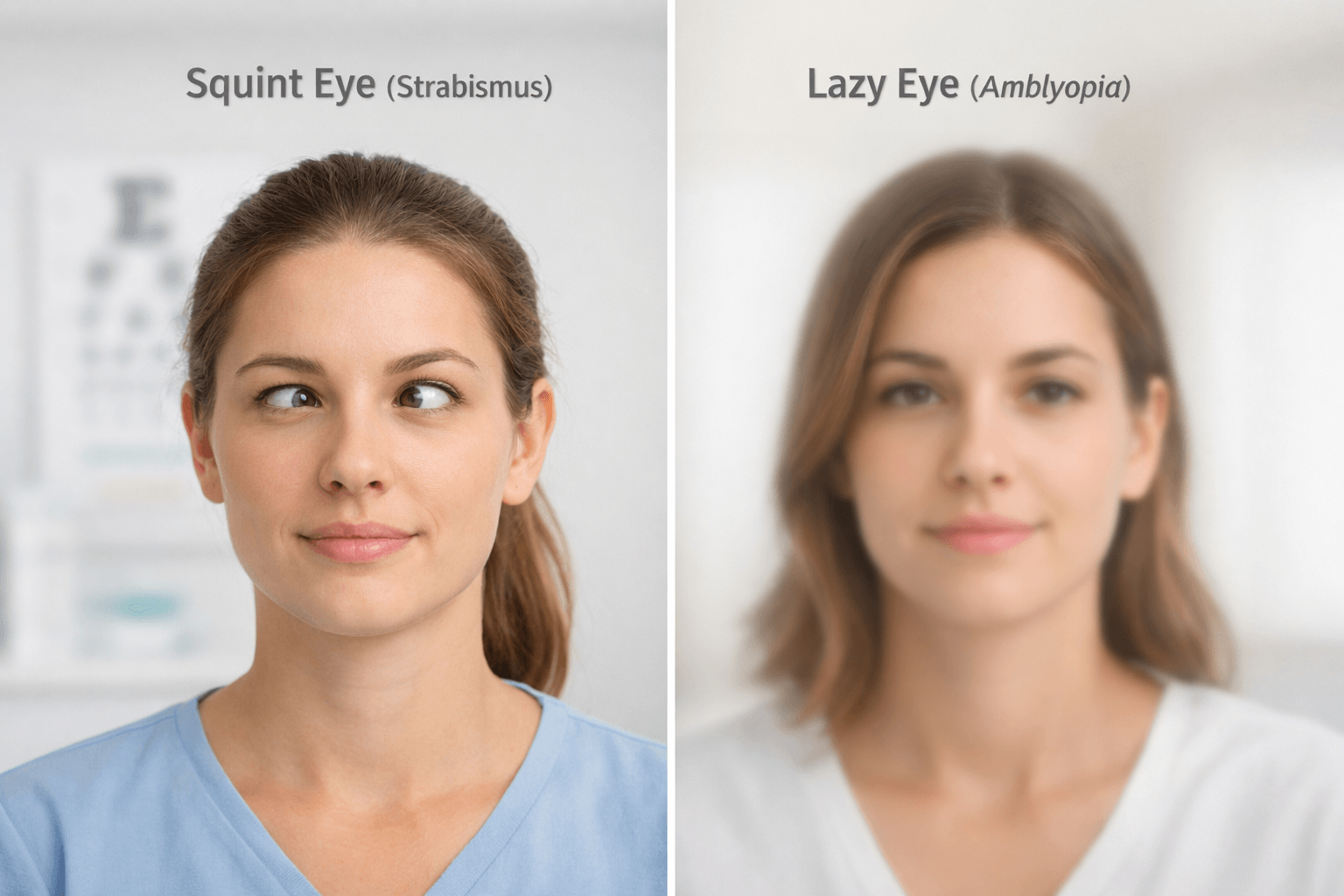
Understanding common eye conditions is essential for timely diagnosis and effective care. Two conditions that people often mistake for each other are squint eye and lazy eye. The two conditions begin with similar appearances but their differences show through their underlying causes and development patterns and treatment methods. The process of identifying vision problems at an early stage together with immediate treatment will help to maintain visual function while stopping future medical issues.
The blog presents key differences between two conditions while explaining their causes and symptoms and treatment methods.
What is a Squint Eye?
A squint eye, medically known as strabismus, is a condition in which both eyes do not align properly. One eye may look straight ahead while the other turns inward, outward, upward, or downward. This misalignment affects binocular vision and depth perception.
Squint Eye Causes
A proper squint eye treatment requires doctors to understand its causes. The most common factors that contribute to the condition include
Weak eye muscles lead to impaired eye movement control.
Nerve-related issues affect the capacity of the eye to move.
People develop the condition because of their inherited genetic traits.
Farsightedness and other refractive errors create visual impairment.
Eye injuries and trauma incidents lead to damage.
Neurological disorders
Each individual develops squint eye from different causes yet doctors need to find the specific reason because it determines which treatment will work best.
Symptoms of Squint Eye
- Misaligned eyes
- Double vision in some cases
- Difficulty focusing
- Poor depth perception
- Eye strain or headaches
What Is a Lazy Eye?
To understand the difference clearly, it is important to define what a lazy eye is. Lazy eye, or amblyopia, is a condition where one eye has reduced vision because it has not developed properly during early childhood. Unlike squint eyes, the issue is not always visible externally.
What Causes Lazy Eyes in Adults?
Although lazy eye typically develops in childhood, cases in adulthood are also observed. Understanding what causes lazy eyes in adults helps in addressing delayed diagnosis. Causes include:
- Untreated squint eye
- Significant difference in prescription between both eyes
- Cataracts or vision obstruction in early life
Lack of early visual stimulation
The brain tends to favour one eye over the other, leading to weaker visual development in the affected eye.
- Symptoms of Lazy Eye
- Blurred vision in one eye
- Poor depth perception
- Difficulty with detailed visual tasks
- Eye strain
Key Differences Between Squint Eye and Lazy Eye
A clear distinction between the two conditions helps in proper management.
Alignment vs Vision Development
Squint eye is primarily a muscle alignment issue.
Lazy eye is a vision development problem where the brain suppresses input from one eye.
Visibility
- Squint eye is usually noticeable due to visible misalignment.
- Lazy eyes may not always be visibly apparent.
Causes
- Squint eye causes are related to muscle imbalance or nerve issues.
- Lazy eyes develop due to lack of proper visual stimulation during early years.
Impact
- Squint eye affects eye coordination.
- Lazy eyes affect visual clarity and sharpness.
Relationship Between Both Conditions
In some cases, a squinted eye can lead to a lazy eye if left untreated. The brain may begin to ignore input from the misaligned eye, resulting in reduced vision over time.
Can Squint Eyes Be Corrected?
The most common problem which people face is determining whether they can receive squint eye treatment. The answer depends on the severity and underlying cause.
At eye hospitals, treatment options for Squint Eye involves prescription glasses which correct refractive errors The second option includes eye exercises which help build coordination skills The third option provides patching therapy which doctors use in specific situations The fourth option uses surgical correction to achieve proper alignment of eye muscles
Early diagnosis brings about better results because it increases treatment success rates. The combination of advanced surgical techniques together with doctors who have extensive experience enables doctors to achieve powerful correction results while keeping patient safety at the highest level.
How Do You Fix a Lazy Eye?
The first step to fixing lazy eye requires exercise programs which help develop the weak eye muscles. Treatment Methods for Lazy Eye The first method requires eye patching which doctors use to cover the stronger eye The second method uses corrective lenses The third method involves vision therapy exercises which help patients improve their visual capabilities
Treatment of underlying conditions such as cataracts
Timely intervention is critical. In adults, treatment may take longer, but improvements are still possible with consistent care.
Importance of Early Diagnosis
Both conditions benefit from early detection. Ignoring symptoms may lead to permanent vision issues.
Must Know Signs
- Frequent eye misalignment
- Complaints of blurred vision
- Difficulty focusing on objects
- Tilting the head while looking at objects
- Recognising these signs early allows for prompt medical attention.
Advanced Care and Treatment Approach
Modern eye care focuses on accurate diagnosis and personalised treatment plans. With decades of excellence in eye care, specialised centres provide:
- Detailed eye examinations
- Advanced diagnostic tools
- Tailored treatment strategies
- Continuous monitoring of progress
- Access to highly experienced expert doctors ensures precision in both diagnosis and treatment.
Cost and Accessibility
Access to quality eye care should not be limited. Many centres today offer leading low price affordable treatment options, making specialised care more accessible.
In addition, periodic discount offer programs help patients begin treatment without delay. Early care not only improves outcomes but also reduces long-term treatment costs.
When to Seek Medical Attention
Ignoring early signs may worsen the condition. It is important to act now if any of the following are observed:
- Persistent eye misalignment
- Sudden vision changes
- Difficulty in focusing
- Visual discomfort during reading or screen use
- Timely consultation ensures better prognosis and reduces the risk of permanent vision impairment.
Conclusion
Squint eye and lazy eye are two separate medical conditions which need different methods for both their diagnosis and their treatment procedures. The two disorders differ because squint eyes cause eyes to lose their proper alignment while lazy eye impacts a person’s ability to see clearly throughout their life. The understanding of this distinction enables people to recognize early symptoms which lead them to find suitable medical assistance.
Modern treatment methods enable doctors to treat both medical conditions successfully. Better visual results occur when expert doctors who possess extensive experience perform early treatment. The combination of affordable healthcare from leading providers with available discount options has made it easier for people to obtain excellent medical treatment. Do not ignore early signs. Act now to protect and preserve long-term vision health.
FAQs
1. Can squint eyes be fixed or permanently repaired?
The answer is “yes” if the squint can be fixed or repaired, depending on the severity and cause of the squint. The treatment of squinting involves several different types of treatments, including surgery, glasses, or therapy, all of which may result in a permanent correction of the squint.
2. What do “lazy eyes” mean, and how serious is this condition?
Lazy eyes refer to reduced vision in one eye caused by a lack of visual stimulation in that eye. If lazy eyes are left untreated, there is an increased risk for loss of vision in the affected eye.
3. What causes lazy eyes in adult patients?
The causes of lazy eyes in adult patients include untreated childhood conditions, refractive errors, or long-term visual imbalance between the two eyes.
4. What is the best way to treat a lazy eye?
The way to treat a lazy eye includes using patching therapy (patching the stronger eye), utilizing a pair of corrective lenses (glasses), and performing vision exercises designed to strengthen the weaker eye.
5. What are some of the common causes of squinting in adults?
The common causes of squinting include, but are not limited to, muscular imbalances of the eye muscles, nerve problems, genetic predispositions, and refractive errors.
6. What is the most common reason for someone to be diagnosed with squinting?
The most common reason for a person to be referred for squinting involves poor visual coordination between both eyes, twice as likely to occur in conjunction with a refractive error.