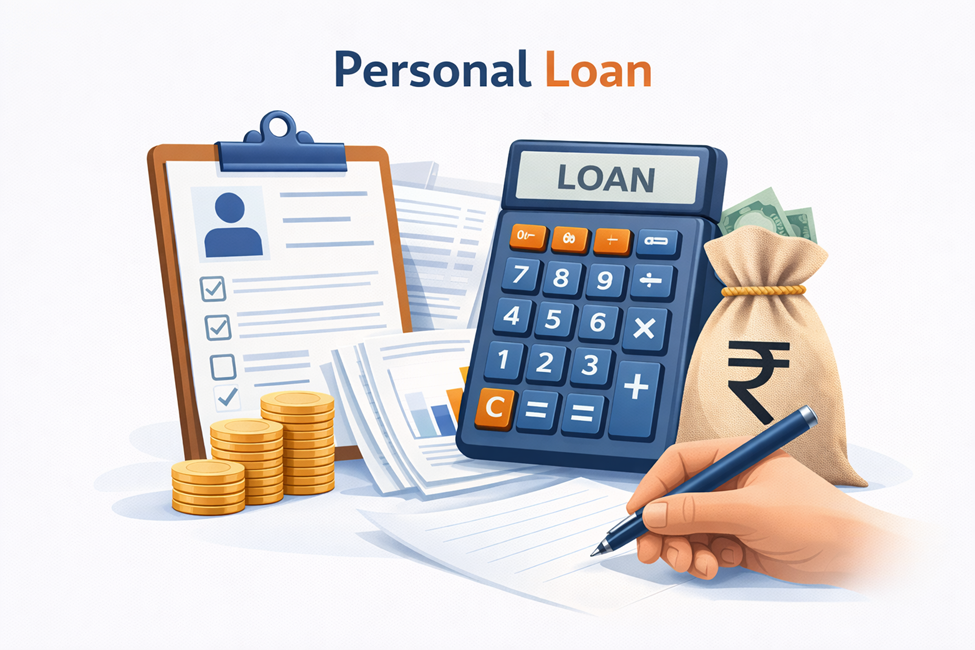
A personal loan is an unsecured borrowing option that gives individuals quick access to funds for a wide range of needs, such as medical emergencies, education, weddings, travel, or debt consolidation. Its versatility, flexibility and fast disbursement. Yet, one common concern arises: what if you do not have a CIBIL score?
A CIBIL score is a three-digit number that reflects your creditworthiness based on past borrowing and repayment behaviour. Many first-time borrowers, especially younger professionals or individuals who have never used credit cards, may not have a score. The absence of a credit history does not necessarily mean you cannot access a personal loan. Lenders will evaluate your application differently, often relying on alternative criteria.
Understanding how lenders assess risk without a credit score and how this impacts the personal loan interest rate is crucial before applying.
How Personal Loans Work Without a CIBIL Score?
Borrowers without a credit score are often first-time applicants. Lenders may still approve a personal loan by evaluating:
- Income Stability: Salary slips, bank statements, and proof of employment are used to assess repayment capacity.
- Employment History: Working with a reputable employer or having consistent work experience improves approval chances.
- Digital Credit Assessment: Financial institutions use transaction data, utility bill payments, and mobile wallet activity to gauge financial behaviour.
- Starter Loans: Some institutions offer small-ticket personal loans to help borrowers build a credit profile.
While possible, approvals without a CIBIL score often come with stricter terms and higher costs.
Alternative Credit Assessment Methods
When borrowers apply for a personal loan without a CIBIL score, lenders often rely on alternative ways to evaluate financial reliability. These methods help institutions gauge repayment capacity even in the absence of a formal credit history.
- Banking Transactions: Regular deposits, consistent salary credits, and healthy account balances can demonstrate financial discipline.
- Utility Bill Payments: Timely payment of electricity, water, and mobile bills reflects responsible financial behaviour.
- Rental History: Consistent rent payments can serve as proof of reliability for first-time borrowers.
- Digital Footprints: Many financial institutions analyse mobile wallet usage, online payments, and transaction patterns to assess creditworthiness.
- Starter Credit Products: Some lenders offer small-ticket loans or secured cards to help borrowers gradually build a track record.
By approaching the process with careful planning, realistic expectations, and responsible repayment, borrowers can turn a personal loan without a CIBIL score into a stepping stone toward stronger financial credibility and long-term stability.
Personal Loan Interest Rate Considerations
The personal loan interest rate is typically higher for borrowers without a credit score. This reflects the lender’s increased risk in extending unsecured credit without repayment history.
Factors influencing the rate include:
- Higher income can improve loan approval chances, even if you don’t have a credit score.
- Employer reputation and job stability help secure better loan terms.
- The requested loan amount also plays a role, as smaller amounts are generally easier to approve and may come with lower interest rates, making them more affordable for borrowers.
- Documentation accuracy is important, since errors in identity or financial records can delay approval or affect loan terms.
- Existing liabilities and the overall debt-to-income ratio are considered when determining eligibility and interest rates.
- Repayment history, even for utility bills or smaller credit products, can strengthen the borrower’s profile.
Borrowers should carefully review the interest rate, processing fees, and penalties before accepting an offer.
Approval Tips Without a CIBIL Score
Securing a personal loan without a credit score requires preparation. Here are practical steps to improve approval chances:
- Demonstrate high income and stability: Provide strong income proof, such as recent salary slips and employment certificates, to show repayment capacity.
- Opt for secured or collateralised loans: Pledging assets such as gold, property, fixed deposits, or shares reduces risk for the lender and improves your chances of approval.
- Apply with a co-applicant or guarantor: Adding a family member or spouse with a strong credit profile can boost eligibility.
- Request a smaller loan amount: Applying for a modest loan reduces the lender’s risk and increases the likelihood of approval.
- Leverage digital lending platforms: Many lending institutions offer flexible options for first-time borrowers without a credit score. Financial institutions such as Tata Capital also provide user-friendly tools, including personal loan EMI calculators, to help applicants plan their repayments with greater confidence.
- Reduce existing debt: Clearing outstanding obligations demonstrates better financial management and strengthens your application.
By following these steps, borrowers can improve their chances of approval even without a formal credit history, while ensuring repayment remains manageable.
When a Personal Loan Is the Right Choice?
A personal loan without a CIBIL score may be the right choice when:
- The borrower has a stable income and can demonstrate repayment capacity.
- The loan requirement is urgent and cannot wait for a credit history to be built.
- The amount needed is moderate and within the lender’s eligibility limits.
- The borrower is committed to using the loan responsibly to establish a credit profile.
Building Credit for the Future
Taking a personal loan without a CIBIL score can be the first step toward building a financial track record. Borrowers should:
- Repay EMIs on time to establish credibility.
- Avoid over-borrowing to keep debt manageable.
- Consider small loans or credit cards to build your score gradually.
- Monitor their credit report once it is generated to ensure accuracy.
Over time, a strong credit history opens the door to better loan products, lower interest rates, and higher borrowing limits.
Conclusion
A personal loan is a flexible financial tool that can be accessed even without a CIBIL score. While the personal loan interest rate may be higher and the loan amount may be limited, careful planning and accurate documentation can improve the chances of approval. Using small loans responsibly helps build a credit history, opening the door to better terms in the future. Borrowers should approach the process with clarity, understanding the risks and trade-offs involved. With transparent lenders and responsible repayment, a personal loan without a CIBIL score can be the first step toward long-term financial stability.