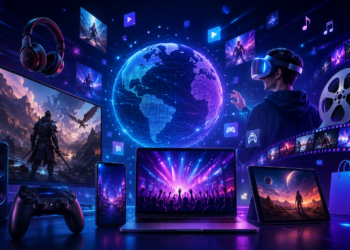

Real-time streaming has quietly revolutionized digital gaming. This wasn’t a sudden shift, but a gradual change that has redefined entertainment expectations.
Players now encounter experiences that begin instantly, respond continuously, and rarely interrupt the flow. There’s less friction at the beginning of each interaction. Less hesitation. A session starts almost immediately, and that immediacy shapes how engagement unfolds from the first moment.
Faster Access, Less Waiting
Access once required patience. Downloads, installations, and loading screens formed part of the routine. That layer is steadily disappearing.
Streaming reduces these delays to the point where they are barely noticeable. A player selects content, and it begins without pause. There’s no preparation phase, no sense of buildup. It feels direct.
This changes behavior in quiet ways. Sessions become shorter and more frequent. Engagement fits into brief intervals throughout the day rather than requiring extended commitment.
The absence of waiting also removes a certain underlying tension. Delays used to be tolerated. Now they feel out of place. Even a small interruption stands out more than it once did.
Speed, in this sense, isn’t only about efficiency. It shapes attention. When content allows play to begin instantly, the expectation of a seamless gaming experience is strengthened.
Interactive Experiences in Real Time
Streaming has altered the nature of interaction itself. Players are no longer positioned at a distance from the experience. They respond, observe, and engage while events unfold. The experience feels active rather than passive. Attention moves with the content instead of resting on it.
There is a different kind of awareness involved. A player watches while also noticing responses from others. Messages appear, reactions follow, and the environment shifts in subtle ways.
In certain formats, this sense of immediacy becomes more tangible. With live dealer casino games, streaming connects players to a real studio environment and human dealers through continuous video. The pace remains steady, chat takes place, actions unfold without interruption, and each moment is presented as it happens.
It doesn’t fully replicate physical presence, yet it narrows the distance in a meaningful way. And that proximity holds attention. Not through intensity, but through enhancing immediacy and a sense of community.
Personalization Through Data and Timing
Real-time streaming also supports more precise personalization. Platforms can adjust content recommendations based on current behavior rather than relying only on past activity.
If a player watches or interacts with certain types of content, suggestions can update within seconds. This creates a dynamic discovery process that feels relevant and current. Players are more likely to find content that matches their preferences without searching extensively.
Personalization also extends to interface adjustments. Layouts, notifications, and featured content can shift in real time to reflect what matters most to the player at that moment, creating a more tailored and efficient experience.
Seamless Integration Across Platforms
Moving between devices once introduced friction. Differences in interface and performance created small disruptions that accumulated over time. Streaming has reduced these inconsistencies.
A player may begin on one device and continue on another without interruption. The transition is seamless. There’s no need to restart or adjust settings. The experience carries on without interruption.
This continuity builds a sense of stability. Players don’t need to consider the technical aspects of access. The important thing is that the environment remains consistent enough to feel reliable.
However, the context changes. A mobile session differs from one on a larger screen. The pace, the level of attention, and the surrounding environment all influence the experience. Yet the core remains intact and, even more importantly, the experience translates across devices without a hiccup.
Social Connection and Shared Moments
Experiencing content at the same moment as others creates a distinct form of engagement. Streaming makes that possible directly and immediately. Messages and messages appear as events unfold. Reactions follow in quick succession. There is a shared rhythm that develops, even among participants who remain unseen.
These social layers increase engagement by making entertainment feel collective. Instead of consuming content alone, players become part of a larger experience where participation matters.
Streaming platforms provide an example of evolving tech trends. One of these trends is remote experiences that allow players to interact with others in real time. This adds a layer of excitement and community.
Over time, this shifts expectations. Players begin to value not just the content itself, but also how a streaming platform optimizes the social aspect of play and enhances the ability to engage with others while experiencing entertainment.
The Quiet Role of Streaming Quality
Streaming quality often sits in the background, yet it shapes the entire experience. Players may not always notice when it works well, but they immediately feel when it doesn’t.
Clarity, frame consistency, and stability influence how natural an experience feels. Even small disruptions can break concentration. A slight delay, a drop in resolution, something that feels out of sync. These details matter.
There is also an expectation of consistency across different conditions. Whether on a stable connection or a more limited one, the experience is expected to adjust without drawing attention to itself. That adjustment is part of what defines quality.
For players, this creates a sense of platform reliability. The experience feels dependable, even when the underlying conditions vary. It’s not something that is often discussed. Still, it quietly shapes perception, holding everything together without needing to be visible.
The Evolving Nature of Real-Time Entertainment
Real-time streaming is redefining what players expect from digital entertainment. Speed, continuity, and responsiveness now define the baseline. Anything that falls short becomes noticeable.
What follows is unlikely to appear as entirely revolutionary. Progress will continue through refinement. Experiences will become smoother, more adaptive, and more aligned with how players naturally engage with their entertainment platforms.
This shift creates a more engaging environment where entertainment feels immediate, relevant, and connected. For players, the value lies not just in what they watch or use but in how much more enjoyment they get from a seamless and interactive experience.